Student Profiles etiketine sahip kayıtlar gösteriliyor. Tüm kayıtları göster

Day in the Life of a Hopkins-Nanjing Center Student: Hope Parker

Student blogger Hope Parker, MAIS ’20, describes a typical day at the Hopkins-Nanjing Center.

Now that I have been in Nanjing for a few months, I have settled into my classes and a weekly routine. Here is what a normal day looks like for me at the Hopkins-Nanjing Center:

6:30 a.m. Go for a run
I start the morning with a run on the Nanjing University track or by going to the Hopkins-Nanjing Center fitness center. As the weather has gotten colder, fewer people have been on the track. Luckily, this morning lots of people were out walking, running, and dancing.
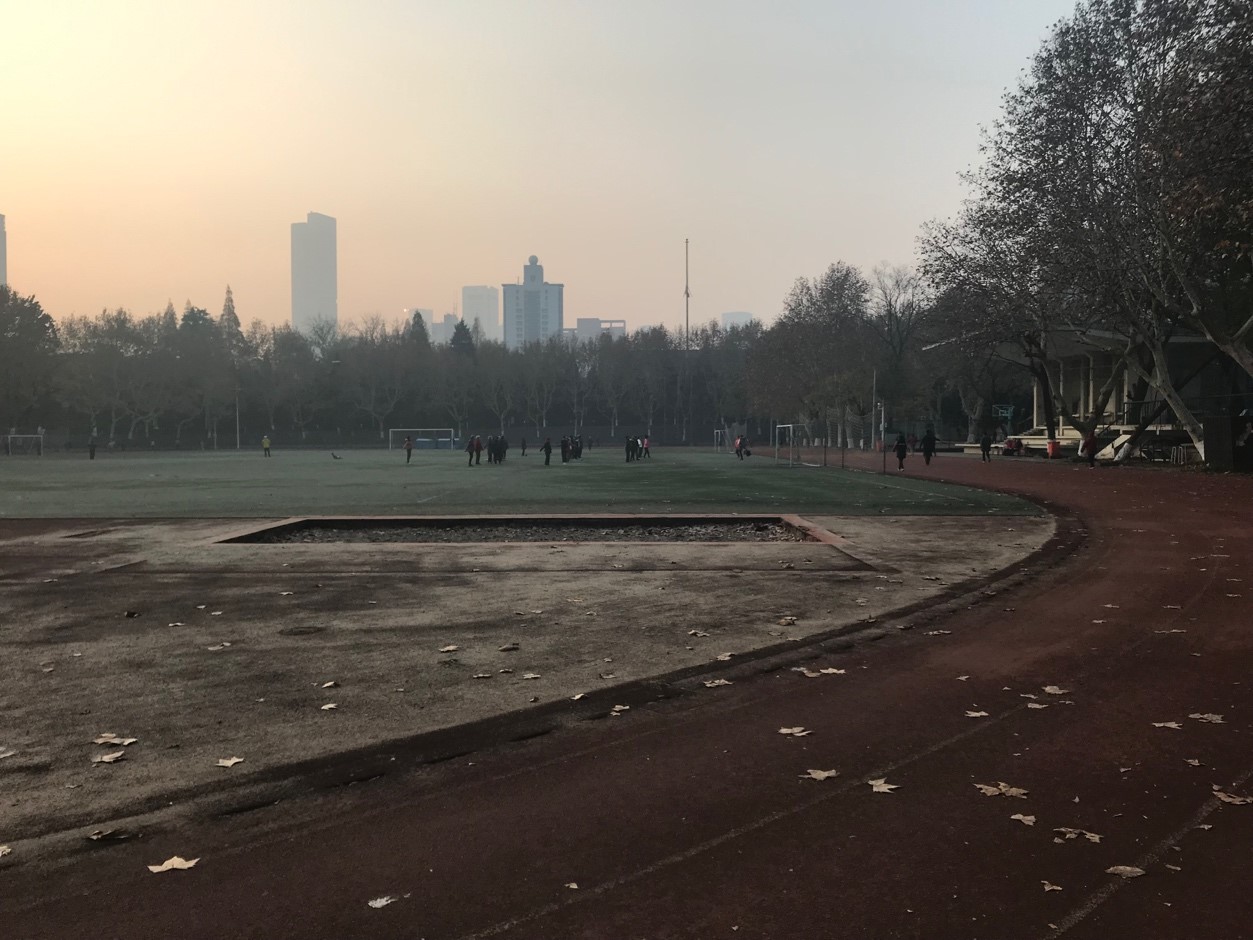
Nanjing University’s track in the morning

8:00 a.m. International Political Economy (IPE)
On Wednesdays I have an early start with my IPE class. This week we have been finishing up topics on maritime issues and trade, and applying theories we studied at the beginning of the semester to events and policies. Today we focused on different states’ policies in the Arctic.

9:50 a.m. International Relations of East Asia
Our class focuses on Northeast Asian relations, particularly on the Korean Peninsula. In our last class we all presented on our final paper topics. Since several students are studying cooperation mechanisms in East Asia, our professor discussed fundamental features and barriers to cooperation in East Asia.

12:00 p.m. Lunch

Around noon I head to lunch at the Hopkins-Nanjing Center cafeteria. Lunch is probably one of the busiest times in the cafeteria because everyone goes to eat right after class. Professors and students catch up with one another and continue class discussions over lunch.

A study space in the Hopkins-Nanjing Center Library

12:30 p.m. Homework
This semester I only have morning classes, which means I usually start preparing for other classes after lunch each day. Today I have to go over my readings for tomorrow’s law class. We just started a unit on internet law and how cyberspace activities could be governed internationally. Once I finish, I start on readings for Friday morning’s International Political Economy class.

There are lots of places to study on campus. Sometimes I’ll study in my room, but there are also various spaces in the library for students to study. If I feel that I need an extra quiet space, I usually go to my study carrel. Master’s students can get a carrel to study in, which is a room that is shared by three students, each assigned their own individual desk. The carrels are available for students to study any time—day or night.

Professor Andrew Mertha giving a lecture on China’s relationship with Cambodia

7:00 p.m. Lecture
Each Wednesday afternoon from is blocked out for visiting lectures at the Hopkins-Nanjing Center—often professors from universities in China and abroad. Tonight we heard from the new China Studies director at Johns Hopkins SAIS, Professor Andrew Mertha, talk about his research on Chinese-Cambodian relations. Lots of students were excited to hear about China’s relationship with Cambodia from an expert in the field.

8:30 p.m. Moot Court

I am a member of the Jessup International Law Moot Court team. Our group usually meets at least once per week to discuss, research, and write, but I also try to do some work on the case each day. Often that means reading about other cases, then adding to my written arguments.

9:45 p.m. Wind Down
At the end of the day my roommate and I are usually both back in our room. Before we go to sleep, we talk about different things that we did that day, as well as what we’re doing later in the week.

Written by Hope Parker, MAIS ‘20

Day in the Life of a Hopkins-Nanjing Center Student: Sam Olson

Student blogger Sam Olson describes a typical day at the Hopkins-Nanjing Center. 
 
6:30-7:20am: Workout with my roommate 
I start off the day with a workout with my roommate, Adam Zhang, to get myself going and mentally prepared for class. The Hopkins-Nanjing Center has its own gym with an excellent variety of weights and exercise machines. In addition, students that apply for Nanjing University student cards can use the gym at Nanjing University, and there are private gyms nearby.


 The Hopkins-Nanjing Center gym


7:20-7:40am: Breakfast 
After working out, I head upstairs to eat breakfast at the cafeteria. The cafeteria offers good food at fairly affordable prices. Beyond the on-campus options, there are multiple restaurants on the main Nanjing University Gulou campus, as well as coffee shops that sell coffee, pastries, and small breakfast sandwiches at low cost.

8:00am: Review readings for my international politics class and catch up on homework
Next, I head to the library to review some readings that we will discuss in our international politics class and go over the PowerPoint slides for today’s class. The library is a very quiet, comfortable environment to do homework and offers an outstanding selection of books and other research materials.

9:50-11:20am: International politics class

In class, we discuss traditional and non-traditional security concerns from realist and non-realist perspectives.

A typical lunch at the 中美中心食堂

11:20 -11:40am: Lunch

12:20-1:40pm: Chinese Constitution class
In my Chinese Constitution class, one of my favorite classes this semester, we continued our discussion of the Chinese political system. One of the reasons I like this class so much is that it serves as a fascinating basis for comparing Western and non-Western legal cultures and values, which adds further dimension to the cross-cultural education we receive at the Hopkins-Nanjing Center.

2:00-5:00pm: Homework, read papers for MA Tutorial course, and begin outlines for papers
After Chinese Constitution is over, I do some readings for my MA Interdisciplinary Tutorial course, as well as for my class on social issues of China’s modernization, and work on some outlines for upcoming papers due in other classes.

5:00-6:00pm Research internships
I use the hour before dinner to research internships and put together application materials for positions next summer. The Hopkins-Nanjing Center provides students with a great career services office that offers extensive guidance and support for students.

6:00pm: Dinner 
 
6:30-8:30pm: Do additional readings for classes 
 
8:30-9:30pm: Relax and play pool in student lounge
After a long day of classes and homework, I unwind by playing some pool in the student recreation room with my roommate and a few other classmates. The recreation room offers students a variety of activities for students, such as gaming consoles, a music room, and a place to practice Chinese calligraphy.

9:30-10:45pm: Make reading notes and call home
I end the day by making some reading notes for tomorrow’s classes, calling my family in the U.S., and then going to bed.

11:00pm: Sleep
 
And that wraps up a typical day in the life of a student! Whatever you need to do during your day, be it doing homework or pursuing a good work-life balance by working out or relaxing, the Hopkins-Nanjing Center provides an excellent living environment in which to do so.

Written by Samuel Olson, Master of Arts in International Studies ’20

Meet the 2018-2019 Student Bloggers in Nanjing

Meet our new student bloggers in Nanjing! Sam Olson, Master of Arts in International Studies ’20, Cady Deck, Certificate ’19, and Hope Parker, Master of Arts in International Studies ’20, will be sharing their experiences studying and living at the Hopkins-Nanjing Center throughout the year.


Sam Olson, Master of Arts in International Studies ’20 (left) 

Hi everyone! My name is Sam Olson, and I am a first-year master’s student at the Hopkins-Nanjing Center double-concentrating in international politics and Chinese studies.  I graduated from Brock University in Ontario, Canada, where I majored in tourism and environment. I started learning Chinese in middle school and knew from early on that I wanted to pursue a major and career that allowed me to work with China in some way.

I first heard about the Hopkins-Nanjing Center when I attended the Middlebury College Summer Language School. There were several aspects that drew me to apply for the master’s program. First, the degree is jointly granted by both a top-tier American and top-tier Chinese university. Second, the Hopkins-Nanjing Center offers the opportunity to study about China in the country itself, which provides key insights that are hard to replicate when studying about China from a school located outside of China. Finally, studying in Nanjing provides the opportunity for international and Chinese students to live and work together. This unique environment not only increases cross-cultural understanding and learning, but also gives international students the chance to ask their Chinese classmates about their perspectives and experiences on what is taught in the classroom, and vice versa. For example, this semester I am taking a class called Social Issues of China’s Modernization, where we’ve been focusing on topics such as the hukou system and Reform and Opening Up.  I’ve had the opportunity to discuss these topics with my roommate and hear his experience with both issues. Having the opportunity to discuss such issues has broadened my understanding of the course material and given me insights that would be difficult to obtain elsewhere. 

The mission and the caliber of the alumni the Hopkins-Nanjing Center produces deeply inspires me, and I believe that this is truly a place worth sharing with the world. Working with the admissions office this year, I am excited to give you a glimpse of all the unique and amazing aspects! In addition, I hope to provide guidance and insightful tips as you navigate the application process.  Good luck, and I hope to see you at the Hopkins-Nanjing Center next year!

Cady Deck, Hopkins-Nanjing Center Certificate 19

Hello! My name is Cady Deck and I am a Certificate student at the Hopkins-Nanjing Center. I graduated from The George Washington University (GW) last May with a double major in international affairs and political science and a minor in Chinese. I also studied abroad in Beijing, Kunming, and Taiwan. I learned about the Hopkins-Nanjing Center when an admissions representative came to GW last November and immediately knew I had to apply!

This semester I am taking three classes taught in Chinese and one class taught in English. One unique class I am taking this semester is called Chinese and American Thought: Bilingual Perspectives. Half of the students are Chinese and the other half are international students, which has already led to some interesting cultural and intellectual exchanges on a variety of topics as we examine and discuss primary texts in the Western and Chinese cannons in Chinese and English. I do not think I would have the opportunity to take a class like this anywhere else! Additionally, in any US institution I can sit in a library reading about China or take a course about China, but at the Hopkins-Nanjing Center I can discuss the lingering effects of the one child policy in Chinese with people inside China. Of course, I will also spend a fair amount of time in the library as well.

Even though it has only been a few weeks, like many students here, I am already involved in several extracurriculars, including basketball and volunteer teaching. One of the great things about the Hopkins-Nanjing Center is that students are encouraged to venture off campus to engage with the community, whether that be informally, like on the Nanjing University basketball courts, or formally, like teaching English at a local elementary school.

I am excited to blog about my experiences this semester and offer insights into what makes the Hopkins-Nanjing Center such a great place! I look forward to helping prospective students throughout the application process.

Hope Parker, Master of Arts in International Studies 20

Hi all! My name is Hope Parker and I am a first-year student in the Master of Arts in International Studies program at the Hopkins-Nanjing Center. I am from the San Francisco Bay area, but I went to Wellesley College in Massachusetts, where I studied international relations, political science, and Chinese language and culture. Studying abroad in Beijing inspired me to continue studying Chinese and Chinese politics.

I first heard about the Hopkins-Nanjing Center while in Beijing as a junior at Wellesley College. I was excited by the opportunity to learn more about China in Chinese and from Chinese professors. In the first few weeks of classes I have already noticed unique opportunities that the Hopkins-Nanjing Center offers. Chinese and International students working and studying together requires us to engage in tough conversations and think critically about each other’s perspectives.

This semester I am taking four courses: International Political Economy, International Relations of East Asia, Transboundary Challenges to Law, and the Master’s Tutorial Course, which helps master’s students prepare for their theses. These courses have given me the chance to hear different perspectives on issues, which I would not have heard or understood in the United States. Additionally, even though the Hopkins-Nanjing Center is not a law school, students have the opportunity to participate in several different moot court teams and compete in China and abroad. This year, I am on the Jessup moot court team, which focuses on international law.

I am excited to help represent the Hopkins-Nanjing Center through the admissions office this year. Before arriving, I knew that it was a unique program. After being here, I am looking forward to helping prospective students understand the opportunities that they could have at the Hopkins-Nanjing Center.

Student Profile: Pawel Chrzanowski

Name: Pawel Chrzanowski

Program: Hopkins-Nanjing Center Certificate '18

Hometown: Newtown, Pennsylvania

Undergraduate Institution and Major:
Pennsylvania State University ’16, Economics, Chinese

Fun Fact: I was born in the United States, but my parents are Polish. I moved to Poland when I was two years old, so my first language was actually Polish. I moved back to the U.S. when I was 10 years old; that’s when I first learned English.


Tell us about your undergraduate experience. How did you become interested in China Studies?
In undergrad, I first chose economics as a major because I was interested in the subject matter. The main reason I started learning Chinese was because first, everyone kept telling me that economics and Chinese go well together and second, I really wanted to learn a third language, and everyone talked about how impossible it was to learn Chinese. I like a challenge, so I thought, if it is impossible then I’m going to learn it. I began taking Chinese language courses my freshman year of college.

Why did you choose the Hopkins-Nanjing Center?
After graduating from Pennsylvania State University, I worked for a year. My job at the time had to do with technology. On the one hand, I’m glad I had that job because it taught me valuable lessons in business and grew my interest in the technology industry. On the other hand, it was also driving me crazy that my job had nothing to do with China. I spent four years learning Chinese, and the fact that I was not growing in my China-focused goal felt like I was stalled. Every time I even saw a picture of someone in China, I felt this envy inside of me and knew that I needed a change in my life. I applied to the Hopkins-Nanjing Center because I knew it was the next best step. When I talked to Lauren Szymanski, Deputy Director of the Hopkins-Nanjing Center Washington Office and an alum of the Certificate program, she spoke to me of the Hopkins-Nanjing Center’s uniqueness and how it is unlike other graduate programs in China. I had previously done a language program in China and only knew what language programs were like: the structure of classes is the same for everyone, and language is the main focus. At the Hopkins-Nanjing Center, not only do students have the ability to choose their own schedules, but more importantly, the subject matter of the courses is very specialized. I liked that I could choose to specialize in economics, government, Chinese studies, etc. I also liked that there was time to get involved in extracurricular activities, such as starting your own interest group.

Tell me about one of your favorite classes.
My favorite class this semester is Professor Feng Chuan’s Comparative Chinese-American Legal Cultures class (中美法律文化比较). As you can tell by the name, the class deals a lot with law, and I have never taken any sort of law class before. I think the class is really interesting, and the Professor really knows a lot about the topic. I really like the concepts he talks about during class, such as law’s influence on the foundations of America and China. I think in order to understand anything, you first have to understand its foundation. I really like the Elon Musk quote which says, “It is important to view knowledge as sort of a semantic tree – make sure you understand the fundamental principles, i.e. the trunk and big branches, before you get into the leaves/details or there is nothing for them to hang on to.” I always try to live by that concept, so I think that Professor Feng Chuan’s class helps me in that way, by helping me understand the foundation, because law has so much influence on the foundation of a country.

What are your summer/post-graduation plans?
My biggest goal is entrepreneurship. In the future, I want to start my own company. I have been working towards that goal, even while I have been here at the Hopkins-Nanjing Center. This semester, I have traveled around China to talk to local manufacturers and spent time learning about the importing process from China to America. For example, I took advantage of some free time over spring break to travel to the Guangzhou Canton trade fair to establish professional relationships with suppliers and manufacturers in China. For work in the more immediate future, my main requirement is that the job has to be involved in some way with China. As I mentioned earlier, what I liked least about my last job was that it didn’t have anything to do with China. I am striving for interesting work that will grow my expertise on China on a global scale and will allow me to continue learning Chinese.

Any advice for prospective Hopkins-Nanjing Center students?
My biggest advice for students coming to the Hopkins-Nanjing Center is to get out and step off the beaten path. My best memories, experiences, and lessons are from those times that I stepped out beyond the classroom and immersed myself in the outside world. One of the unique things about the Hopkins-Nanjing Center is that although we spend a lot of time studying for class, students still have plenty of time to go exploring. Many language programs in China that most students have done before do not give you much free time. When you are in one of those programs, that is all you are doing. Students at the Hopkins-Nanjing Center have freedom and time to get involved in other things. It’s such a great thing because it really allows you to flourish outside of the classroom. So, while in Nanjing, my advice is to go out, start or join an interest group, work on a random personal project that has to with China, and simply take advantage of where you are.  

Sum up your Hopkins-Nanjing Center experience in two words:
“Enlightening” and “Involved.” “Enlightening” in that we take classes in Chinese dealing with international politics and international economics, among others. So, you are not only improving your language skills, but you are also really learning a lot in various subject matters. “Involved,” in that you can get involved in so many extracurricular activities. I co-led the yoga student interest group and helped organize the Halloween party this year, which gave me a well-rounded experience.

Interviewed by Emily Rivera, Certificate '18