climate change etiketine sahip kayıtlar gösteriliyor. Tüm kayıtları göster

The Green Amendment by Maya K. van Rossum


Summary (Amazon): For decades, activists have relied on federal and state legislation to fight for a cleaner environment. And for decades, they’ve been fighting a losing battle. The sad truth is, our laws are designed to accommodate pollution rather than prevent it. It’s no wonder people feel powerless when it comes to preserving the quality of their water, air, public parks, and special natural spaces.

But there is a solution, argues veteran environmentalist Maya K. van Rossum: bypass the laws and turn to the ultimate authority—our state and federal constitutions.

In 2013, van Rossum and her team won a watershed legal victory that not only protected Pennsylvania communities from ruthless frackers but affirmed the constitutional right of people in the state to a clean and healthy environment. Following this victory, van Rossum inaugurated the Green Amendment movement, dedicated to empowering every American community to mobilize for constitutional change.

Now, with The Green Amendment, van Rossum lays out an inspiring new agenda for environmental advocacy, one that will finally empower people, level the playing field, and provide real hope for communities everywhere. Readers will discover:

• how legislative environmentalism has failed communities across America,
• the transformational difference environmental constitutionalism can make,
• the economic imperative of environmental constitutionalism, and
• how to take action in their communities.

We all have the right to pure water, clean air, and a healthy environment. It’s time to claim that right—for our own sake and that of future generations.


Reviews:

Maryland considering adopting a Green Amendment: https://www.youtube.com/watch?v=99jXgqNCJis

Quotes: 
"Water is more important than gas."

"Over a ten year period, when comparing an equal weight of the two gases (carbon dioxide and methane), methane is 100 times more powerful in trapping heat in the Earth's atmosphere."

"In 2011, the prestigious journal Climatic Change published their paper (R.W. Howarth, R. Santoro and A. Ingraffea, "Methane and the Greenhouse Gas Footprint of Natural Gas from Shale Formations.") and its startling conclusion: natural gas, harvested from shale, was worse for the climate than coal."

"You have a right to pure water, clean air and a healthy environment. This right is inherent and indefeasible. It belongs to you."

PA State's Constitution Environmental Rights Amendment: 
"The people have a right to clean air, pure water, and to the preservation of the natural, scenic, historic and esthetic values of the environment. Pennsylvania’s public natural resources are the common property of all the people, including generations yet to come. As trustee of these resources, the Commonwealth shall conserve and maintain them for the benefit of all the people."  https://conservationadvocate.org/pennsylvanias-environmental-rights-amendment/
Interviews: 

Delaware Riverkeepers: http://www.delawareriverkeeper.org/

For the Generations website: http://forthegenerations.org/

DISCUSSION MEETING PLACE LOCATION FOR THIS MONTH: Bucks County Audubon Society Visitor Center at Honey Hollow Environmental Center at 2877 Creamery Road, New Hope 18938, starting at 6:15 p.m.

Discussion Questions: 
1. Despite states having environmental right amendments, such as here in PA, why do we continue to have to battle oil, gas and chemical companies for clean water, etc.? (p. 15, 82-)
2. Discuss some of the critical environmental issues, highlighted by the author and many of which are local to PA and the area, including stories about fracking, pipeline construction and infrastructure, water contamination and excessive real estate development (PennEast pipeline, p. 122, DuPont, p. 134, Bishop’s Tube in Chester, p. 174, PFOS water contamination in Warrington, Warminster, p. 154, etc.).
3. What are some of the statistics that surprised you, such as perhaps, methane’s impact on the climate(p. 88), mineral rights, water use for fracking (p. 73, 79), % of Americans wanting the environment protected (p. 217), etc.
4. Discuss a state versus a federal constitutional environmental amendment, their role and significances. (p. 12)
5. Discuss the different players, who make powerful decisions about our resources each day: DRBC, FERC, EPA, NEUP(108). There are many acronyms and what do they all mean?
6. Laws don’t ban pollution or development, but because of the Clean Air Act and the Clean Water Act, a permit is now needed to do so. (p. 42) Discuss the different chemicals that are dumped into our environment legally or illegally: PFOA, PFOS (153), PCB (141), TCE (175).
7. In the final chapter, the author discusses how states can create or strengthen environmental provisions for their state constitutions. Pennsylvania already possesses environmental provisions, but is of varying strength and rigor. What are some actions needed to strengthen our provision here in PA? (See page 9-10, 62, Chapter 2) This is what it states as of 1971, Article 1, Section 27–the Environmental Rights Amendment:
“The people have a right to clean air, pure water, and to the preservation of the natural, scenic, historic and esthetic values of the environment. Pennsylvania’s public natural resources are the common property of all the people, including generations yet to come. As trustee of these resources, the Commonwealth shall conserve and maintain them for the benefit of all the people.”
8. What are some actions, that each of us can take, to help secure our rights to a clean environment?

Please feel free to bring your own questions to our discussion on April 26 at 6:15 p.m. at the Bucks County Audubon Society’s Honey Hollow Environmental Center and/or also to ask Maya after her presentation and book signing on May 5, 1:00 p.m. at the Doylestown Bookshop.


(http://news.kgnu.org)

The Hour of Land by Terry Tempest Williams

The Hour of Land by Terry Tempest Williams


Summary: (from Macmillian Publishers)
"America’s national parks are breathing spaces in a world in which such spaces are steadily disappearing, which is why more than 300 million people visit the parks each year. Now Terry Tempest Williams, the author of the environmental classic Refuge and the beloved memoir WhenWomen Were Birds, returns with The Hour of Land, a literary celebration of our national parks, an exploration of what they mean to us and what we mean to them.
From the Grand Tetons in Wyoming to Acadia in Maine to Big Bend in Texas and more, Williams creates a series of lyrical portraits that illuminate the unique grandeur of each place while delving into what it means to shape a landscape with its own evolutionary history into something of our own making. Part memoir, part natural history, and part social critique, The Hour of Land is a meditation and a manifesto on why wild lands matter to the soul of America."


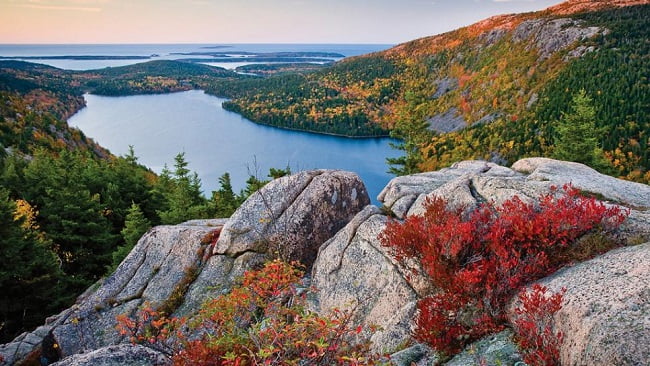
Arcadia National Park
(https://www.national-park.com)

Quotes:

"Our national parks are our breathing spaces."

"Our public lands - whether a national park or monument, wildlife refuge, forest or prairie - make each one of us land-rich. It is our inheritance as citizens of a country called America.” 

“This is what we can promise the future: a legacy of care. That we will be good stewards and not take too much or give back too little, that we will recognize wild nature for what it is, in all its magnificent and complex history - an unfathomable wealth that should be consciously saved, not ruthlessly spent.”

Reviews: 


Interviews: 


2. Experience Life Mag - Behind the Scenes with the author: 

https://www.youtube.com/watch?v=PJqJE36VTAI (**Be sure to watch this**)


>The National Parks Series by Ken Burns with Terry Tempest Williams introduction: https://www.youtube.com/watch?v=tUn4IuOHrRU


Vermillion Flycatcher (http://cdn.audubon.org/)

Author's Website: http://www.coyoteclan.com/


Effigy Mounds National Monument
(https://www.nationalparks.org)


Discussion Questions: (Heidi wrote these and will lead the discussion)
1.     Which national parks have you visited and what are some of your memories, from your visit, which make you ‘swoon’ as Maine does for our author?

2.     After reading this book, are there any parks that you want to visit more than ever now?

3.     Do you have ’place’?  A land or space that you feel tied to?

4.     To describe Wind Canyon’s terrain in Theodore Roosevelt National Park, she uses the verbs, “break, erode, collapse, slide . . .”  (p. 80) Which verbs would you use to describe Bucks County?

5.     Our author writes, “Again and again, we find the common story of the establishment of our national parks: a handful of people fall in love with a place, see it threatened, want to protect it for the future and have the passion and patience to attract the necessary fund and political clout to make it happen.” (p. 105) If you had the ability, time and money to protect and save a parcel of land, where would you choose, how small or large and why?

6.     There are numerous wonderful passages, poems and quotes in this book. One of my favorite is from Laurance Rockefeller: “ How we treat our land, how we build upon it, how we act toward our air and water, in the long run, will tell what kind of people we really are.” (p 28) What are some of your favorite quotes and why?

7.     What do you think of Roosevelt’s vision of “democracy of experience” having created the carriage roads in Arcadia? (p. 92)

8.     Williams’ writing style is beautiful, descriptive, visual, and poetic. She includes letters to friends, sections from her notebooks, and shares struggles with her family. How do you react to her style and does it enhance the stories she’s telling? Also, discuss her letters presented in the Canyonlands chapter. (p. 256)


9.     Our federal parks are not only places of beauty and rejuvenation, but also often used for extracting resources, as our author shares of the situation at Theodore Roosevelt National Park, Gulf Islands National Seashore, and Canyonlands National Park. She asks, “How might we begin a different kind of conversation so that our public lands are seen as our public commons, instead of the seedbed of rancor, violence and greed?” What can we do to protect and support our national parks? Consider pages 264, 271, 297, 308, 326.


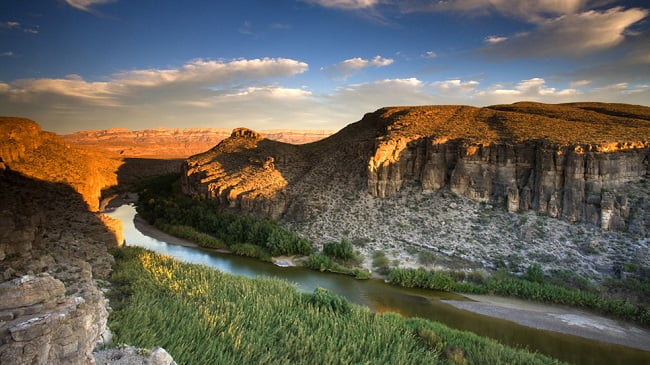
Big Bend National Park 
(https://www.national-park.com)


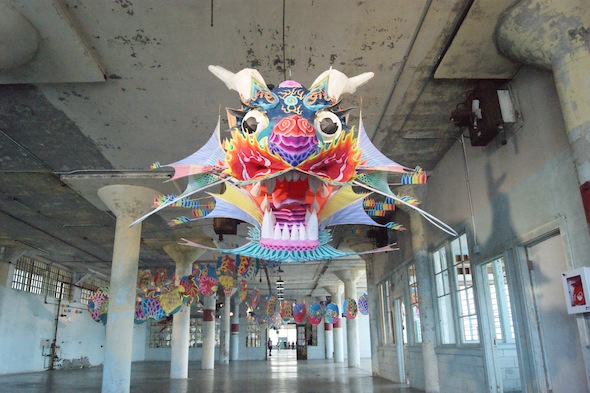
Koan Boxes 
(http://www.lawrencefodor.com/www.lawrencefodor.com/Koan_Boxes.html)


This Changes Everything: Capitalism vs. The Climate by Naomi Klein

This Changes Everything: Capitalism vs. The Climate by Naomi Klein


Summary from Amazon:
"The most important book yet from the author of the international bestseller The Shock Doctrine, a brilliant explanation of why the climate crisis challenges us to abandon the core “free market” ideology of our time, restructure the global economy, and remake our political systems.

In short, either we embrace radical change ourselves or radical changes will be visited upon our physical world. The status quo is no longer an option.

In This Changes Everything Naomi Klein argues that climate change isn’t just another issue to be neatly filed between taxes and health care. It’s an alarm that calls us to fix an economic system that is already failing us in many ways. Klein meticulously builds the case for how massively reducing our greenhouse emissions is our best chance to simultaneously reduce gaping inequalities, re-imagine our broken democracies, and rebuild our gutted local economies. She exposes the ideological desperation of the climate-change deniers, the messianic delusions of the would-be geoengineers, and the tragic defeatism of too many mainstream green initiatives. And she demonstrates precisely why the market has not—and cannot—fix the climate crisis but will instead make things worse, with ever more extreme and ecologically damaging extraction methods, accompanied by rampant disaster capitalism.

Klein argues that the changes to our relationship with nature and one another that are required to respond to the climate crisis humanely should not be viewed as grim penance, but rather as a kind of gift—a catalyst to transform broken economic and cultural priorities and to heal long-festering historical wounds. And she documents the inspiring movements that have already begun this process: communities that are not just refusing to be sites of further fossil fuel extraction but are building the next, regeneration-based economies right now.

Can we pull off these changes in time? Nothing is certain. Nothing except that climate change changes everything. And for a very brief time, the nature of that change is still up to us.

Jury citation: The Izzy Award:


“This is the best book about climate change in a very long time— reminding us just how much the powers-that-be depend on the power of coal, gas and oil. And that in turn should give us hope, because it means the fight for a just world is the same as the fight for a liveable one.”
Book and film website: https://thischangeseverything.org/

Videos on Vimeo: https://vimeo.com/thischangeseverything

Film trailer: https://www.youtube.com/watch?v=EBfJ1vf9Xqw

Author interview on:
Guardian Live: https://www.youtube.com/watch?v=dhJA7HCPHDA
CNN: https://www.c-span.org/video/?321676-1/book-discussion-changes-everything

Bucks County Audubon Society Associated Event: September 13: Advocacy for a Cleaner Earth Fall Speaker Series held at Delaware Valley University at 6:30 p.m. with Maya van Rossum, who will be discussing the impact of gas pipelines on clean water. http://www.bcas.org/event/advocacy-for-a-cleaner-earth-series/


Classroom Curriculum Guide by Caroline Sarmiento of Uni. of Wisconsin:
https://thischangeseverything.org/wp-content/uploads/2015/10/48780-this-changes-everything-curriculum-singlepages-1.pdf

Interview with Steve Colbert with David Keith on Geoengineering: 
http://www.cc.com/video-clips/lv0hd2/the-colbert-report-david-keith

Official Book and Film Guide: http://www.oekolog.at/fileadmin/oekolog/dokumente/News/TCE-Study-Guide.pdf

Study Guide by Author: https://thischangeseverything.org/studyguide/

Discussion Questions: (Heidi will be leading the discussion)
The book is divided into 3 parts: I. Bad Timing, II. Magical Thinking and III. Starting Anyway, with 13 Chapters total. I’ve provided questions for each section, some of my own and some taken or inspired from the above listed Classroom Curriculum Guide. Be sure to get a flavor for the whole book, at least skimming and especially making it to end chapters, which are more hopeful.
1. How has this book challenged your position on climate change? How do you conceptualize the relationship between the environment, society, and nature? How do current events, i.e. Hurricanes Harvey, Irma, Maria reinforce these issues and perhaps be wake up calls/tipping points for governments and societies to push for change? What do you think of the statement by Pruitt that it seems “insensitive” to discuss climate change at this time?”
2. “The earth is not our prisoner, our patient, our machine, or, indeed, our monster. It is our entire world. And the solution to global warming is not to fix the world, it is to fix ourselves.” With that said, how does consumerism connect to Climate Change?  Is this just an US dilemma? Can we can consume less and change how much energy we use and if yes, how? (p. 90)

3. What are the connections between trade agreements, pollution, and labor exploitation? What implications does localizing our economies have on climate change? Are there some negative consequences? (p. 76 -)
4. How are the political and economic interests behind certain “bridge fuels” linked to preventing us from making a full switch to zero carbon sources of energy? (p. 128-) Who are the local actors and players who can become renewable energy providers?
5. “Extractivism is a nonreciprocal, dominance-based relationship with the earth.” (p. 169) What different forms of power does this entail when reducing life into objects for the use of others and irreversibly destroys large tracts of earth? The production and power in spite of nature (example of the steam engine) is based on the right to conquer nature.
6. "A Great many progressives have opted out of the climate change debate, in part, because they thought that the Big Green groups, flush with philanthropic dollars, had this issue covered. That, it turns out, was a grave mistake.” Which environmental groups participated in this and were you surprised? (p. 192 - , p. 226) Why does it matter where funds come from? What are the central dangers of the merge between the environmental movement and the economic interests behind soaring emissions? What might be other unintended consequences?

7. What is the role of big businesses and powerful people or the “green billionaires” in the climate movement if not to save us?  (p. 232) Who are some local messiahs? How does this idea of messiahs influence the way we see change in other social movements as well?

8. “The cure could be worse than the disease.” (p. 275) What do you think about “Geoengineering” and the “Geocliche”? What do you think about the finding that older respondents are more amenable to Geoengineering than younger ones? Is this a generational difference? Access to information? Faith in technology?

9. Klein presents the argument that we are all in sacrifice zones, yet we do see different rates of state violence and displacement in low-income communities of color. (p. 310 -) How do these stark forms of state violence place different pressures on certain communities to participate in different ways?

10. Klein asserts that the power of “ferocious love” and when individuals or a community fight for their identity, a culture, a beloved place, that there is nothing a company can offer as a bargaining chip. (p. 342) What are your thoughts and perhaps, observations of this?

11. Indigenous peoples have the right to the conservation and protection of the environment and the productive capacity of their lands, territories and resources and they have a right to redress lands, which have been taken or damaged without their consent. Many non-natives are beginning to understand that indigenous land and treaty rights have provided a major barrier for the extractive industries and are asking for their help. Discuss this and coalition building. (p. 367 - )


12. This book provides a space to reflect on our own actions as individuals as well as a community. What are you doing personally to combat CO2 emissions and going green? What are some of your goals?