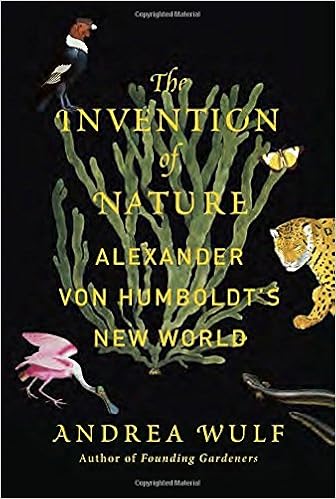
1. How did Humboldt go from being the most celebrated scientist of the nineteenth century to being largely unknown in our time? What did you know about Humboldt before reading this book?
2. What are some of the concepts of the times, that greatly influenced Humboldt’s thinking, such as Kant’s concept of a systematic construct and Goethe’s ideas and belief of the marriage of art and science.
3. How did Humboldt expand on his concept of “Nature must be experienced through feeling,”? How does he develop this further? Is this inconsistent with scientific practice?
4. From the beginning of time, it was believed that humans had command over nature, as stated in the Bible, to Aristotle and on into the 17th century with Francis Bacon declaring “the world is made for man” and Descartes wrote that humans were “the lords and possessors of nature.” Many believed, that all the land should be cultivated and “improved” and tidy. These ideas are prevalent in our own society again today. What causes this disconnect with nature and man?
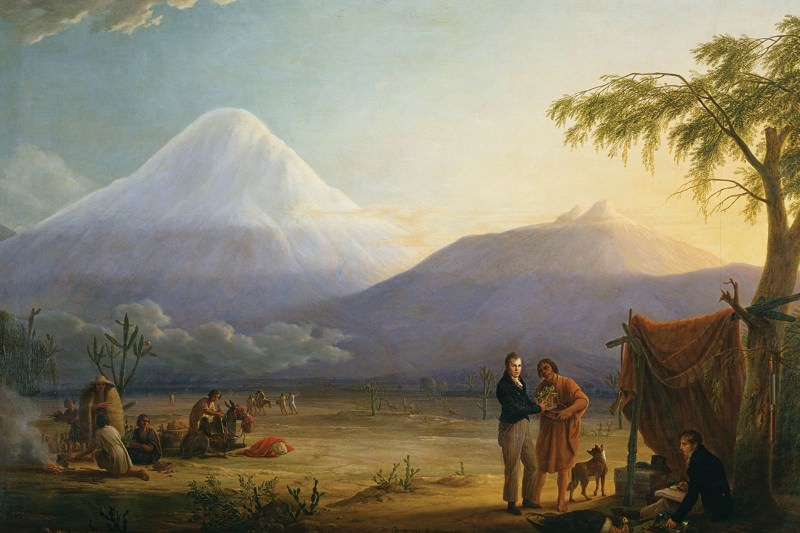
5. Describe some of his exciting travels and dangerous moments?
6. What are some of the negative impacts humans were having on the environment already at that time, that Humboldt observed and were concerned about, i.e Lake Valencia, deforestation, climate change, animal populations such as the turtles from the Orinoco rainforest.
7. How was Humboldt’s view of nature and Earth radically different from previously? What experiences in particular helped him develop his ideas?
8. Who were some of the great people, notably coming from many different disciplines, that were influenced by Humboldt and what were some of his ideas, that became seeds of new concepts that they later developed?
9. One of his greatest achievements was his book, Cosmos. Did this book inspire Carl Sagan’s book Cosmos?
10. Describe the process by which he created networks of scientists and the incredible number of letters he wrote and received during his career to forge these associations.